
TECHNICAL SPECIFICATION

Global Brand Comparison Matrix

Selecting the appropriate Bearing Lubrication is the single most important factor in preventing premature bearing failure, which accounts for nearly 36% of all operational issues.

This ZGBK matrix provides a high-level cross-reference of 38 industrial greases from 8 world-class manufacturers. Whether your application requires Klüber's temperature resistance or Mobil/Shell's versatility, our data ensures precise matching of NLGI consistency grades and operational temperature thresholds for your specific machinery needs.

TABLE 1. PERFORMANCE CROSS-REFERENCE OF GLOBAL BRANDS

▸ Smart Search — Filter by brand, model, or application need
Brand Grease Name NLGI Temp Range ℃ Primary Application

* Full 38-grease database across 8 global manufacturers. Contact ZGBK for custom application matching.

Mastering Grease Fill Quantity

> OPTIMIZING VOLUME TO PREVENT "CHURNING" AND OVERHEATING.

A frequent error in Bearing Lubrication management is over-greasing, leading to "churning"—where rolling elements fight through excess grease, causing rapid friction-induced heat spikes and accelerated oil oxidation. ZGBK Technical Specifications recommend:

  • Standard Industrial: 30% to 50% fill of internal free space.
  • High-Precision Spindles: As low as 20% to prevent thermal runaway at extreme speeds.
  • Corrosive / Marine: Up to 100% fill to act as a secondary physical barrier against heavy contamination and water ingress.
⚠️ THE 15°C RULE

Scientific data shows that bearing service life is approximately halved for every 15°C increase in operating temperature above 70°C. Proactive thermal monitoring is essential for optimizing relubrication cycles.

FILM DYNAMICS

Engineering the EHD Film

In the sphere of high-performance rotating equipment, Bearing Lubrication is far more than a simple lubricant; it is a critical engineering component. The primary goal is to establish a robust Elastohydrodynamic (EHD) lubrication film. This microscopic oil layer, often only a few microns thick, is responsible for separating the rolling elements from the raceways, neutralizing metal-to-metal contact and managing the distribution of load across the contact surfaces.

A typical grease consists of Base Oil (80–90%), Thickeners (such as lithium or polyurea), and Performance Additives. The thickener acts like a sponge holding the oil in a semi-solid matrix—this "glue-like" consistency keeps grease within the bearing while rolling motion "squeezes" the oil out for lubrication. By integrating these choices with Bearing Accuracy Standards, ZGBK ensures clearances are calibrated for thermal expansion.

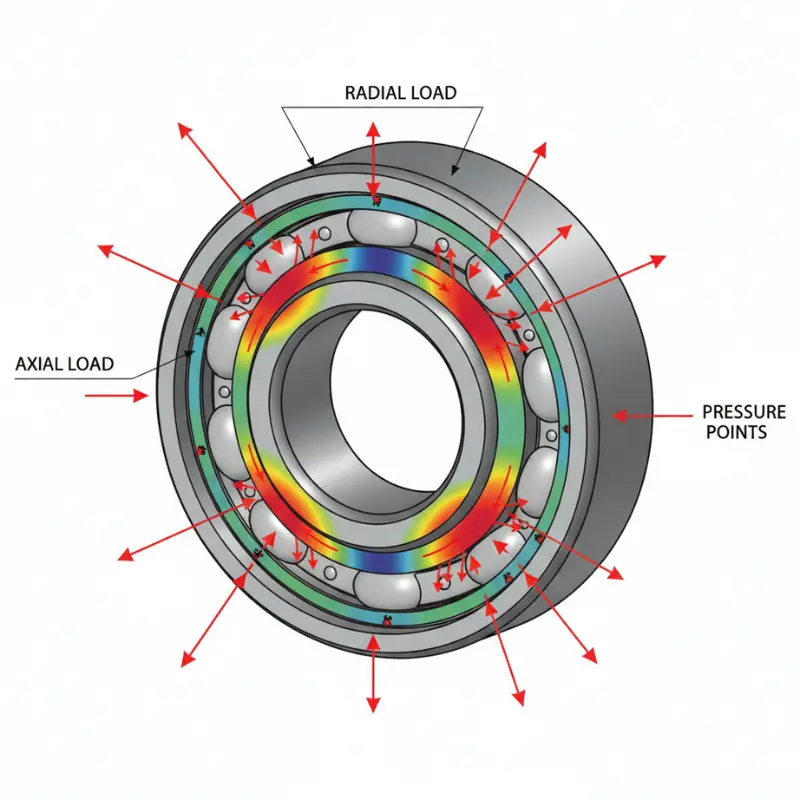
Bearing Lubrication Film Formation

Compliance & Global Standards

Reliability is further enhanced through strict adherence to international protocols. All ZGBK lubrication strategies are in full compliance with ISO 492:2023 and DIN 51825. These standards ensure geometric stability and chemical compatibility across diverse sectors including textile manufacturing, automotive assembly, and heavy mining.

Before relubricating, always ensure thickener compatibility (e.g., avoid mixing lithium and clay-based greases), as incompatible mixtures can lead to grease softening and total system failure.

Official ISO 492:2023 Standard ↗
Technical Support

Selection Challenges?

Our engineers can help you choose the ideal grease based on your application's load, speed, and environment.

Why ZGBK®

Engineered for extreme reliability.

  • Precision Automated Grease Filling
  • Wide Selection of Global Grease Brands
  • Controlled Cleanliness Environments
Talk to our Experts